


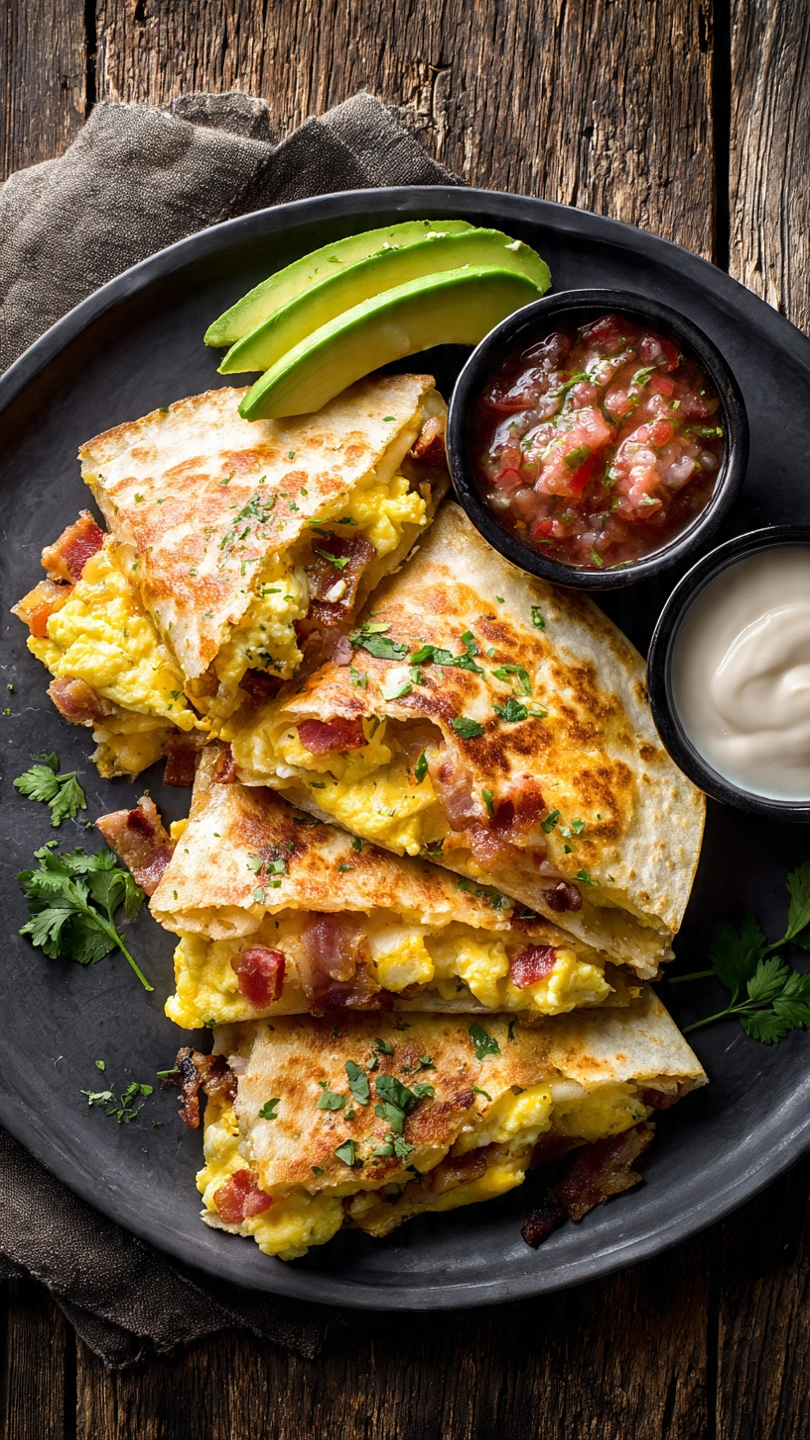
Breakfast quesadillas have become a cherished morning tradition in our family home, bringing warmth and comfort to our kitchen table for generations. The sizzling sound of tortillas crisping on the griddle and the delightful aroma of melting cheese and savory fillings signal the start of a day filled with love and nourishment. These versatile Delicious breakfast treats transform ordinary mornings into special occasions, allowing everyone to customize their fillings while still enjoying a shared family experience. Whether it’s weekend brunches when everyone gathers around the table or busy weekday mornings when we need a portable handheld meal, Breakfast Quesadillas have earned their place as a beloved family favorite that spans generations.
In our household, these golden-brown pockets of breakfast goodness represent more than just a meal—they embody the tradition of coming together, sharing stories, and creating memories around food. The beauty of breakfast quesadillas lies in their simplicity and adaptability, making them perfect for families with varying tastes and preferences. Let me share with you our time-honored recipe that has brought countless smiles to sleepy morning faces.
Table of Contents
Table of Contents
Ingredients
For our classic family breakfast quesadillas (serves 4):
- 8 medium-sized flour tortillas (8-inch diameter)
- 2 cups shredded cheddar cheese (a family favorite, though Monterey Jack or a Mexican cheese blend works beautifully)
- 8 large eggs, scrambled
- 6 strips of bacon, cooked crisp and crumbled
- 1 medium bell pepper, finely diced (red peppers add a lovely sweetness and color)
- 1 small onion, finely chopped
- 2 tablespoons butter for cooking, plus extra as needed
- 1/4 teaspoon garlic powder
- 1/4 teaspoon paprika
- Salt and freshly ground black pepper to taste
For serving and garnishes:
- 1 cup fresh salsa (store-bought or homemade)
- 1 cup sour cream
- 1 large avocado, sliced or made into guacamole
- 1/4 cup chopped fresh cilantro
- Hot sauce (optional, for those who enjoy some heat)
Timing
Creating these beloved breakfast quesadillas doesn’t require hours in the kitchen, making them perfect for both leisurely weekends and hurried weekday mornings:
- Preparation Time: 15 minutes (chopping vegetables, cooking bacon, and scrambling eggs)
- Cooking Time: 15-20 minutes (assembling and cooking quesadillas, 3-4 minutes per quesadilla)
- Total Time: 30-35 minutes
For our family, we often prepare components the night before—chopping vegetables, cooking and crumbling the bacon, and setting out the cheese and tortillas—which reduces morning preparation time to just 20 minutes. This advance preparation has been a lifesaver during busy school mornings when time feels especially precious.
Step-by-step Instructions
Preparing the Fillings:
- Start by cooking the bacon in a large skillet over medium heat until crisp, about 8-10 minutes. My grandmother taught me to start with a cold pan for the most evenly cooked bacon. Remove the bacon to paper towels to drain, then crumble when cool enough to handle.
- Pour off all but 1 tablespoon of the bacon grease from the skillet (save it in a jar for future cooking if you’re like my mother!).
- Add the diced bell pepper and onion to the skillet with the remaining bacon grease. Sauté until the vegetables are tender and the onions are translucent, about 5-6 minutes.
- While the vegetables are cooking, whisk the eggs in a large bowl with the garlic powder, paprika, salt, and pepper.
- Push the vegetables to one side of the skillet and melt 1 tablespoon of butter in the empty space.
- Pour the egg mixture into the skillet and cook, gently stirring, until soft curds form but eggs are still slightly moist (they’ll continue cooking in the quesadilla).
- Mix the eggs with the sautéed vegetables, then remove from heat.
Assembling and Cooking the Quesadillas:
- Heat a clean, large skillet or griddle over medium heat. My father always said the key to a perfect quesadilla is having the right pan temperature—hot enough to crisp the tortilla but not so hot it burns before the cheese melts.
- Lightly butter one side of a tortilla and place it butter-side down in the skillet.
- Sprinkle about 1/4 cup of shredded cheese evenly over the entire tortilla.
- On one half of the tortilla, place approximately 1/4 cup of the egg mixture and a sprinkling of crumbled bacon.
- Allow the cheese to begin melting (about 1 minute), then carefully fold the empty half of the tortilla over the filling to create a half-moon shape.
- Cook for about 1-2 minutes until the bottom is golden brown, then gently flip and cook the other side for another 1-2 minutes until crispy and golden.
- Remove to a cutting board and let rest for 30 seconds (a tip from my grandmother to help the fillings set).
- Cut into wedges with a sharp knife or pizza cutter.
- Repeat with remaining tortillas and fillings.
Serving:
- Arrange the quesadilla wedges on a large platter, family-style.
- Place bowls of salsa, sour cream, avocado or guacamole, and cilantro in the center of the table.
- Allow everyone to garnish their quesadillas according to their preferences—a tradition that even the youngest family members have always enjoyed.
Nutritional Information
Understanding what we’re feeding our family has always been important in our household. Here’s the approximate nutritional information for one breakfast quesadilla (1/4 of the recipe):
- Calories: 520
- Protein: 23g
- Carbohydrates: 32g
- Dietary Fiber: 3g
- Sugars: 2g
- Fat: 34g
- Saturated Fat: 15g
- Cholesterol: 245mg
- Sodium: 890mg
- Calcium: 350mg
- Iron: 3mg
These breakfast quesadillas provide a substantial morning meal with good protein content from the eggs and cheese. They offer calcium for bone health and iron for energy—nutrients I’ve always made sure my children receive in their morning meals. While they are somewhat high in fat and sodium, the family-style meal can be balanced with fresh fruit on the side for a complete breakfast.
Healthier Alternatives
Over the years, our family recipe has evolved to accommodate changing health needs and dietary preferences. Here are some modifications we’ve embraced without sacrificing the comforting taste of tradition:
- Whole Wheat Tortillas: Swap the regular flour tortillas for whole wheat versions to increase fiber content. My grandmother was skeptical at first but came to appreciate the nutty flavor they add.
- Reduced-Fat Cheese: Using reduced-fat cheese or reducing the amount by 25% still provides the melty goodness while cutting down on saturated fat. We’ve found that mixing full-fat and reduced-fat cheese offers the best compromise.
- Turkey Bacon: Substitute regular bacon with turkey bacon for less fat. My brother’s family makes this swap regularly and finds it just as satisfying.
- Egg Whites: Replace some or all of the whole eggs with egg whites (2 egg whites for each whole egg) to reduce cholesterol and calories. My sister started doing this after her doctor’s recommendation.
- Added Vegetables: Increase the nutritional value by adding spinach, kale, or grated zucchini to the egg mixture. Even the children don’t mind the “green specks” when they’re hidden in the cheesy goodness.
- Greek Yogurt: Replace sour cream with plain Greek yogurt for a higher protein, lower-fat alternative. This was my mother’s innovation that’s become our new standard.
- Cooking Method: Use a light spray of olive oil instead of butter for cooking the quesadillas to reduce saturated fat.
For our family members watching their carbohydrate intake, we sometimes make a “quesadilla bowl” with all the fillings but without the tortilla—surprisingly satisfying and still feels like part of our shared tradition.
Serving Suggestions
In our family, breakfast quesadillas rarely stand alone. Over generations, we’ve developed favorite pairings that create a balanced and satisfying meal experience:
- Fresh Fruit Platter: A colorful array of seasonal fruits has always been our go-to accompaniment. The sweetness and freshness balance the savory richness of the quesadillas. My children particularly love strawberries, orange slices, and grapes alongside their quesadilla wedges.
- Cucumber-Tomato Salad: A simple side of diced cucumber, halved cherry tomatoes, and a light vinaigrette adds a refreshing element. This was my grandmother’s contribution to lighten the meal.
- Chilled Gazpacho: During summer months, a small cup of chilled gazpacho makes for an elegant and cooling complement. My husband introduced this Spanish twist that’s become a seasonal favorite.
- Breakfast Potatoes: For heartier appetites, especially during harvest season when my father needed substantial fuel for farm work, crispy breakfast potatoes with bell peppers and onions extend the meal.
- Mexican Rice: For a more lunch-like offering, a side of simple Mexican rice turns breakfast quesadillas into a filling brunch option. This became our tradition for Sunday family gatherings.
For special occasions like birthdays or when relatives visit, we create a “Breakfast Quesadilla Bar” where everyone can build their own with an array of fillings and toppings set out buffet-style. This interactive meal experience has created some of our fondest family memories.
Common Mistakes
Through years of making breakfast quesadillas for hungry family members, I’ve encountered (and learned from) several common pitfalls that can turn this simple breakfast into a frustrating experience:
- Overfilling the Tortillas: Perhaps the most frequent mistake, especially when young helpers are involved. Too much filling makes the quesadilla difficult to flip and leads to ingredient spillage. Our family rule of thumb: keep fillings to a thin, even layer that leaves a half-inch border around the edge.
- Cooking at Too High Heat: Impatience leads to burnt tortillas with unmelted cheese inside—a disappointment my husband discovered early in our marriage. Medium heat allows the tortilla to crisp gradually while the cheese melts properly.
- Not Draining Wet Ingredients: Vegetables with high water content can make quesadillas soggy. My mother taught me to sauté vegetables thoroughly to evaporate excess moisture before adding them to the filling.
- Flipping Too Early: The tortilla needs to develop a firm golden crust before flipping, or you’ll end up with a folded mess. Look for the cheese beginning to melt as your signal that it’s ready to fold and then flip.
- Using Cold Tortillas: Cold tortillas straight from the refrigerator often crack when folded. We’ve learned to let them come to room temperature or briefly warm them before assembling.
- Skipping the Rest Time: Cutting quesadillas immediately after cooking causes fillings to spill out. The 30-second rest that my grandmother insisted upon allows everything to set properly.
Perhaps the most valuable lesson I’ve learned is that a less-than-perfect quesadilla still tastes delicious. When my children were learning to cook and produced slightly burnt or oddly shaped creations, we celebrated their efforts rather than focusing on perfection—a tradition of kitchen grace that continues in our family.
Storage Tips
While breakfast quesadillas are best enjoyed fresh off the griddle when the contrast between crispy exterior and warm, melty interior is at its peak, our busy family life has taught us several methods for storing and reheating:
- Refrigerator Storage: Completely cooled quesadillas can be wrapped individually in aluminum foil and refrigerated for up to 3 days. This method has saved many a rushed weekday morning in our household.
- Freezer Storage: For longer preservation, place cooled quesadillas in a single layer on a baking sheet and freeze until solid (about 1 hour). Then wrap each one in plastic wrap followed by aluminum foil or place in freezer bags. Label with the date and contents (especially helpful for identifying different family members’ preferred fillings). These will keep for up to 2 months in the freezer.
- Component Preparation: My mother’s method involves preparing all components separately and storing them in the refrigerator for up to 3 days. The scrambled eggs, cooked vegetables, crumbled bacon, and shredded cheese can be kept in separate containers, allowing for fresh assembly and cooking each morning.
For reheating, we’ve found these methods work best:
- Skillet Reheating: For the closest experience to freshly made quesadillas, reheat refrigerated ones in a dry skillet over medium-low heat for 2-3 minutes per side until heated through and re-crisped.
- Oven Reheating: Place refrigerated or thawed frozen quesadillas on a baking sheet in a 350°F oven for 10-12 minutes. This method works well when reheating multiple servings for the whole family.
- Toaster Oven: A favorite method for older children reheating their own breakfast, the toaster oven crisps the tortilla nicely at 350°F for about 8 minutes.
- Microwave (Emergency Method): While not ideal for maintaining crispness, placing a quesadilla on a microwave-safe plate and heating for 30-45 seconds per quesadilla works when time is extremely limited. My teenagers rely on this method most often.
A special tip passed down from my aunt: when reheating frozen quesadillas, thaw them overnight in the refrigerator for the best texture. If reheating directly from frozen, add a few extra minutes to any of the methods above.
Conclusion
Breakfast quesadillas have woven themselves into the fabric of our family’s culinary heritage, representing far more than just a morning meal. They embody our approach to nourishing both body and soul—balancing tradition with adaptation, simplicity with satisfaction. From my grandmother’s kitchen to my own, and eventually to my children’s future homes, these humble yet versatile creations continue to evolve while maintaining their essence as a vessel for family connection.
What makes breakfast quesadillas so enduring in our household is their ability to accommodate changing tastes, dietary needs, and schedules while still bringing everyone to the table with the same anticipation and enjoyment. Whether meticulously crafted on a lazy weekend morning or hastily assembled during the weekday rush, they never fail to provide comfort and nourishment.
I invite you to make this recipe your own, adapting it to your family’s preferences and creating your own traditions around it. Perhaps you’ll add a special spice blend, incorporate a regional ingredient, or develop your own signature folding technique. Whatever your variation, the heart of the breakfast quesadilla remains the same—simple ingredients transformed through care and attention into something greater than the sum of its parts, much like family itself.
As my grandmother would say while serving her golden-brown quesadillas to eager hands around the table, “Food made with love feeds more than just the stomach.” May your breakfast quesadillas bring the same warmth and connection to your family table that they have brought to ours through the generations.
FAQs
Can I make breakfast quesadillas ahead of time for a large family gathering?
Absolutely! For our extended family reunions, I prepare all the components the night before—cook and crumble the bacon, sauté the vegetables, and shred the cheese. In the morning, I quickly scramble the eggs and assemble the quesadillas. To serve a crowd, keep cooked quesadillas warm in a 200°F oven on a baking sheet while you continue making more. Alternatively, set up a quesadilla bar and let guests build their own, which has become a beloved tradition at our family gatherings.
How can I make breakfast quesadillas for family members with dietary restrictions?
Our family has navigated various dietary needs over the years. For gluten-free members, use certified gluten-free corn or gluten-free flour tortillas. For vegetarians, omit the bacon and add more vegetables like mushrooms for a savory element. Dairy-free family members can enjoy these with plant-based cheese alternatives—we’ve found that some brands melt better than others, so it’s worth experimenting. For family members watching carbohydrates, create a “quesadilla bowl” with all the fillings but no tortilla, served in a small dish.
My children are picky eaters. How can I adapt breakfast quesadillas for them?
When my children went through selective eating phases, I found that simplifying was key. Start with just tortilla and cheese for very particular eaters—what my mother called the “training quesadilla.” Gradually introduce one new ingredient at a time. Finely chopping or even grating vegetables helps them blend in unnoticed. Inviting children to participate in assembly often increases their willingness to try the final product. Creating fun shapes by cutting the quesadillas with cookie cutters was another successful strategy in our household for encouraging adventurous eating.
What’s the best cheese to use for authentic breakfast quesadillas?
In our family, we’ve found that a combination of cheeses provides the best flavor and melting quality. A mixture of sharp cheddar and Monterey Jack is our standard, with the cheddar providing flavor and the Monterey Jack offering excellent meltability. For a more authentic Mexican flavor, try Oaxaca cheese, which has wonderful stretchy qualities, or queso quesadilla, which is specifically designed for melting. My Mexican-American aunt introduced us to cotija cheese as a finishing touch sprinkled on after cooking, adding a pleasant salty note. Regardless of which cheese you choose, freshly grated cheese melts more smoothly than pre-shredded varieties with anti-caking agents.
How can I make breakfast quesadillas part of a balanced meal for my family?
Balance has always been important in our family meals. To create a nutritionally complete breakfast, serve quesadillas with a side of fresh fruit for additional vitamins and fiber—berries, sliced apples, or orange segments work beautifully. Adding extra vegetables to the filling increases the nutritional value; spinach, bell peppers, and tomatoes are favorites in our household. Using whole wheat tortillas adds more fiber and nutrients. For growing children with higher calorie needs, like my active teenagers, a small smoothie on the side provides additional protein and fruit servings. Remember that breakfast quesadillas provide substantial protein from the eggs and cheese, supporting sustained energy throughout the morning.